
OEM methodology · Gulf mobility
أنظمة instrumentation للتنقل في الخليج — NEOM · البحر الأحمر
State logic Radial hierarchy Safety first
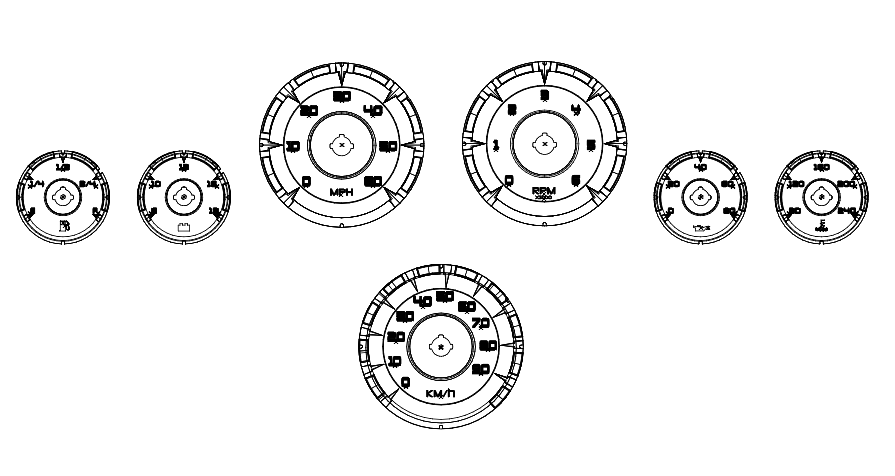
A state-driven radial cockpit architecture for marine and desert mobility — production-derived HMI logic shaped on the gauge floor, not in a mood board.
1 · Origin & domain
Origin: a manufacturing environment that produced gauges for marine, off-road, on-road, and military industries — shaped by software engineers, industrial designers, product managers, motherboard fabricators, sales, floor staff, and quality inspectors.
Marine · off-road · industrial · defense-grade instrumentation · UI systems. All domains except automotive.
Production-calibrated problem solving — resolving real design issues under fabrication, safety, and field-readability constraints.
Executive summary
A dual-layer cognitive model translated into a software-defined radial cockpit interface.
High-density telemetry, RPM, dynamic load — inherited mechanical gauge logic and performance complexity.
Speed, navigation, safety-first hierarchy — directional intelligence for future mobility logic.
Performance wraps clarity through hierarchy — but never overrides it.
2 · Role & contribution
Figma · Adobe Illustrator · After Effects
Qt / QML · Unreal Engine HMI concept alignment
3 · Problem statement
Core failures
Cost of failure
4–5 · Design objective & core concept
| Layer | Symbolic model | Functional role |
|---|---|---|
| Gyrfalcon | Legacy · high-performance complexity | RPM · telemetry · dynamic data |
| Saker | Foresight · operational clarity | Speed · navigation · safety |
Two layers keep field-of-vision load focused at high speeds. One area reads. One area decides.
Design objective: separate performance and navigation cognition · maintain 2-second glance readability · adapt across marine and desert · support Arabic/English bilingual logic · scale across OEM multi-vehicle platforms.
6 · Information architecture
Navigation dominates the screen — waypoint bar logic familiar from game HUDs. Stars, sun, and moon remain telling references on open water.
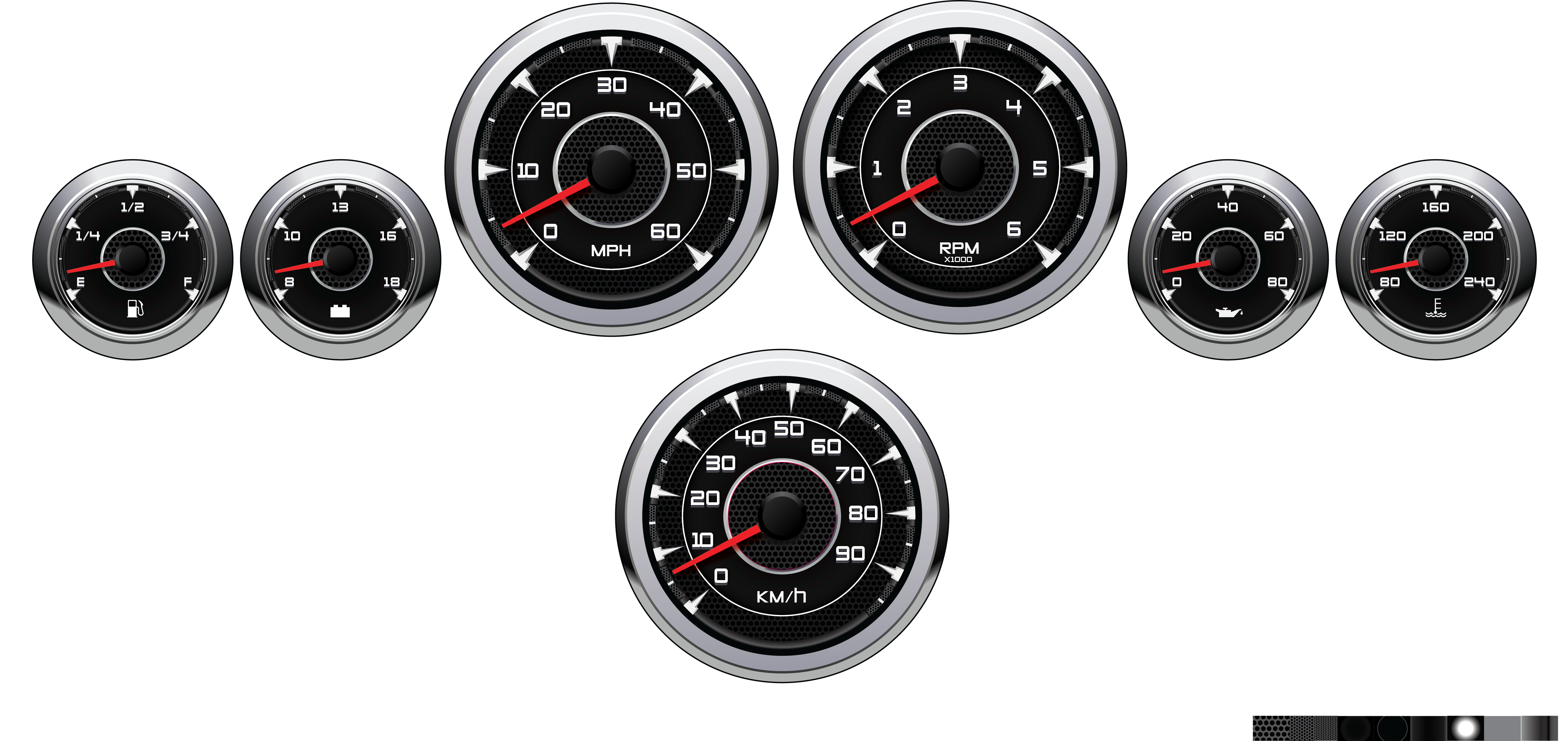
7 · Information hierarchy
Cognitive load reduction under motion stress — not decoration under duress.
6.1 · State-based UI logic
No-wake zone · low load · speed + navigation priority · reduced visual noise.
Moderate performance engagement · stabilized radial motion.
RPM outer ring dominance · telemetry exposure · enhanced motion response.
Alert override · navigation collapse · critical data only.
State triggers: speed · engine load · user input · system alerts · environmental zones. What changes: structure · hierarchy · motion · density.
8 · Human factors
9 · Multi-environment adaptation
Marine first — because production familiarity lives there. Desert second — because contrast logic transfers.
10–11 · Cultural & visual rules
Arabic-first spatial hierarchy with English secondary alignment. RTL structure must never distort radial geometry spacing.
Gulf-native by lived context — not imported UX patterns applied from outside the region.
12 · OEM system alignment
Tesla-style state UI · BMW iDrive hierarchy · Mercedes hyperscreen layering.
Garmin / Raymarine helm architecture · navigation-first prioritization.
Honeywell-style cockpit layering · forward situational awareness mapping.
13 · Application & industry use
Primary entry — highest domain expertise and production familiarity.
Second expansion — high-contrast performance clusters.
State-driven UI for NEOM / Red Sea corridor platforms.
Layered situational awareness for next-gen mobility ecosystems.
14 · Outcomes
OEM reviewers evaluate constraint awareness and honest experience boundaries — not marketing language.
15 · OEM evaluation & positioning
“A state-driven radial instrumentation architecture designed for Gulf mobility ecosystems, balancing high-performance telemetry with operational clarity under safety-first OEM constraints.”